|
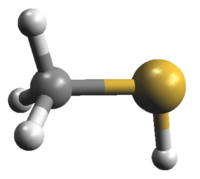
Methanethiol and its isotopologs undergo methyl internal rotation hindered
by a moderately low barrier, similar to methanol and its isotopologs.
In the case of CH2DSH, this leads vt = 0
to be split into three substates e0 and o1
of gauche-CH2DSH and e1 of
anti-CH2DSH. These substates are indicated by state numbers
0, 1, and 2, respectively.
The linelist is based on an extensive analysis of microwave, sub-millimeter
wave, terahertz, and FIR data pertaining to CH2DSH in
vt = 0 presented in
(1) H. A. Bunn, S. Spezzano, L. H. Coudert, J.-C. Guillemin, Y. Lin, C. P. Endres,
B. Billinghurst, O. Pirali, J. Jørgensen, V. Lattanzi, and P. Caselli,
2025, Astrophys. J. Lett. 980, Art. No. L13.
The line list includes previous microwave and lower millimeter data
from
(2) C. F. Su and C. R. Quade,
1983, J. Chem. Phys. 79, 5828;
from
(3) C. F. Su, M. Liu, and C. R. Quade,
1993, J. Mol. Spectrosc. 158, 21;
and from
(4) C. R. Quade, M. Liu, and C. F. Su,
2007, J. Mol. Spectrosc. 244, 109.
The treatment of the data was described in some detail in (1);
further details are available in (2-4) and additional articles cited in (1).
Transitions in the fit extend to J = 24 and K = 12,
which should be sufficient for astronomical observations.
Unfortunately, no uncertainties were calculated for the transition
frequencies, instead, a generic default of 0.5 MHz is given.
More unfortunately, no line list has been provided thus far.
It was stated in (1), that 3419 transition frequencies with
microwave accuracy were fit to an rms of 0.27 MHz.
The dipole moment components and their first order torsional
contributions were calculated from the dipole components
of the main isotopic species taken from
(5) S. Tsunekawa, I. Taniguchi, A. Tambo, T. Nagai,
T. Kojima, and K. Nakagawa,
1989, J. Mol. Spectrosc. 134, 63;
and from the derived CH2DSH potential.
The quantum numbers in the catalog file are J, K,
p, "v", where p = 1 or 2 is the parity,
and "v" the state number of the torsional substate
as specified above.
The partition function takes into consideration
vt = 0 with J and K extending
to 32 and 12, respectively; gI = 1 was applied.
The partition function should be quite good up to temperatures of about
150 K; the most severe limitation at higher temperatures is the
restriction to vt = 0.
|